Mushroom Mountain
Blewit “Lepista nuda” Living Mulch
Blewit “Lepista nuda” Living Mulch
Couldn't load pickup availability
Turn Fallen Leaves into Living Soil
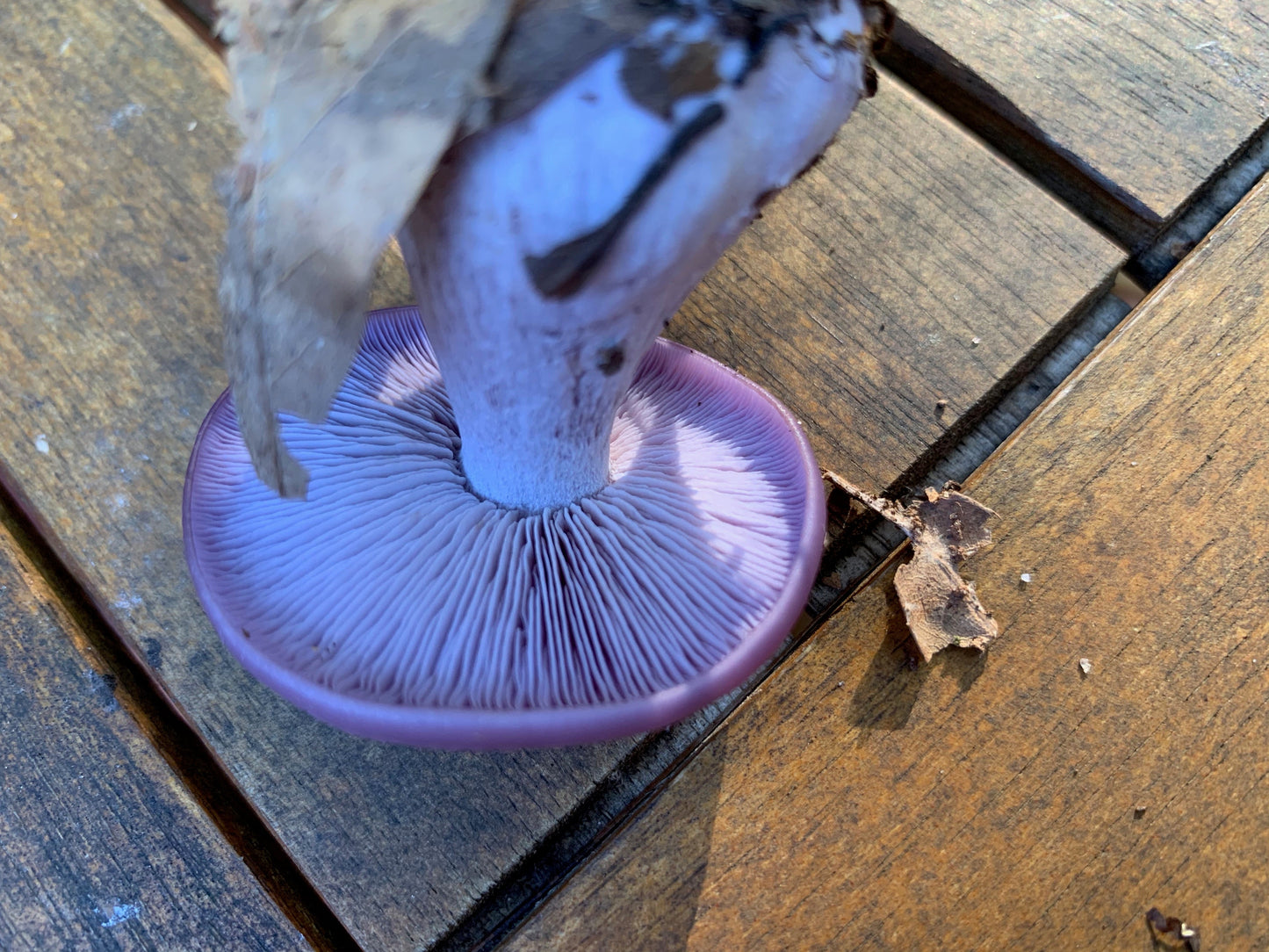
Blewits (Lepista nuda) are stunning lilac-to-purple mushrooms that fruit in the cool months of fall and winter - often after a hard frost signals it’s time.
Unlike many garden fungi that slow down in cold weather, Blewits get to work when others pause. They thrive in leaf litter, compost piles, and mulched garden beds, quietly transforming fallen leaves into rich, dark humus.
This is cold-season soil building at its finest.
What Makes Blewits Special
- Beautiful purple-lilac caps
- Mild, silky flavor
- Fruits in fall and winter
- Typically produces two flushes a few weeks apart
- Requires a frost or freeze to initiate fruiting (not suited for tropical climates)
They’re not just pretty - they’re practical.
What It Does for Your Garden
🌿 Accelerates Composting
Rapidly digests leaf litter and organic matter, speeding up natural decomposition.
🌑 Builds Dark, Rich Humus
Improves soil structure and long-term fertility.
💧 Improves Moisture Retention
Creates a sponge-like mycelial network that helps soil hold water.
🌱 Extends the Soil-Building Season
Active in fall and winter when many fungi slow down.
🌾 Supports Weed Suppression
Quick colonization of leaf piles and mulch helps crowd out some unwanted growth.
Ecological Benefits
🪱 Supports the Soil Food Web
Encourages worms, soil invertebrates, and beneficial microbes.
🌎 Boosts Fungal Biodiversity
Adds diversity to your garden ecosystem, stabilizing soil biology.
🍄 Perfect Companion to Garden Giant
While Garden Giant thrives in woodchips, Blewits thrive in leaf litter.
Together, they work different layers of organic debris for full-spectrum soil creation.
And Yes… You Get Mushrooms
Blewits are beautiful edible mushrooms with a mild, silky flavor.
Best sliced and seared before adding to soups, sauces, or creamy dishes (a splash of sherry is optional - but recommended).
They extend your mushroom harvest into the cooler months - long after summer crops have faded.
🌱 How to Plant Your Living Mulch
These are fully colonized woodchips - not sawdust.
That means the hard work is already done.
You have two easy options:
Option 1: Add Directly to Your Garden
- Spread the inoculated woodchips 1–3 inches thick around plants, trees, raised beds, or along pathways. Add some leaf mulch.
- Water thoroughly.
- Cover with a thin layer of straw to help retain moisture.
- Keep lightly moist, especially during dry periods.
That’s it. The mycelium will spread, break down organic matter, and begin building rich soil beneath the surface.
Option 2 (Recommended): Expand Your Culture
For larger areas, you can multiply your bag.
- Lay down a fresh layer of hardwood woodchips.
- Evenly distribute the inoculated woodchips throughout the new chips. if you have leaf litter add that as well.
- Mix lightly or layer like lasagna.
- Water well.
- Cover with straw for moisture retention.
The mycelium will colonize the fresh woodchips over time, expanding your soil-building system naturally.
Blewits prefer leaf litter, compost-rich areas, and mixed mulch beds. They fruit after cold weather sets in, often following a frost.
Identification Note
Blewits produce a white spore print.
Some Cortinarius species can resemble them but have a rusty-orange spore print. Always confirm identification before consuming.
Frequently Asked Questions
• Leaf litter
• Compost-rich garden beds
• Raised beds
• Woodland gardens
• Around shrubs and trees
• Mulched pathways
• Permaculture systems